
 By artistkb1993@gmail.com
Have You Ever Wondered Why Some Brands Go Viral on a Low Budget While Others Fail Despite Spending More?
The secret lies in a well-planned influencer marketing strategy.
Influencer marketing has emerged as one of the most powerful marketing techniques in recent years. The rise in user engagement and increased screen time has only amplified its impact.
In this article, we’ll break down influencer marketing from start to finish and help you understand how to choose the right influencer for your brand.
What Is Influencer Marketing?
In the age of social media, people trust people — not paid ads. That’s where influencer marketing comes in. It’s a technique where brands collaborate with influencers to promote products or services through authentic recommendations on platforms like Instagram, Facebook, YouTube, and more — depending on the target audience and product type.
Types of Influencers and Their Impact
| Type of Influencer | Follower Count Range | Engagement Level | Ideal For |
| Nano Influencers | 1K – 10K | Very High (8–10%) | Local businesses, niche brands, authentic reviews |
| Micro Influencers | 10K – 100K | High (5–8%) | Startups, lifestyle, and community-driven campaigns |
| Macro Influencers | 100K – 1M | Moderate (1-5%) | Established brands aiming for wider reach |
| Mega Influencers | 1M+ | Low (1-3%) | Big brands, mass awareness campaigns |
| Industry Experts / Thought Leaders | Varies (5K – 500K) | Medium to high (4-6%) | B2B brands, professional or educational content |
How do influencers create engagement and trust ??
Influencers build trust and engagement by sharing personal experiences, honest product reviews, and detailed product walkthroughs. They create a two-way communication channel with their audience, making followers feel heard and valued. People connect emotionally with real stories and genuine experiences — and that authenticity is what builds lasting trust.
Where to Find the Right Influencer?
Finding the right influencer depends on your product and target audience. For example, if your product is designed for a younger audience, Instagram is the ideal platform to connect with them.
Why Choose Influencer Marketing?
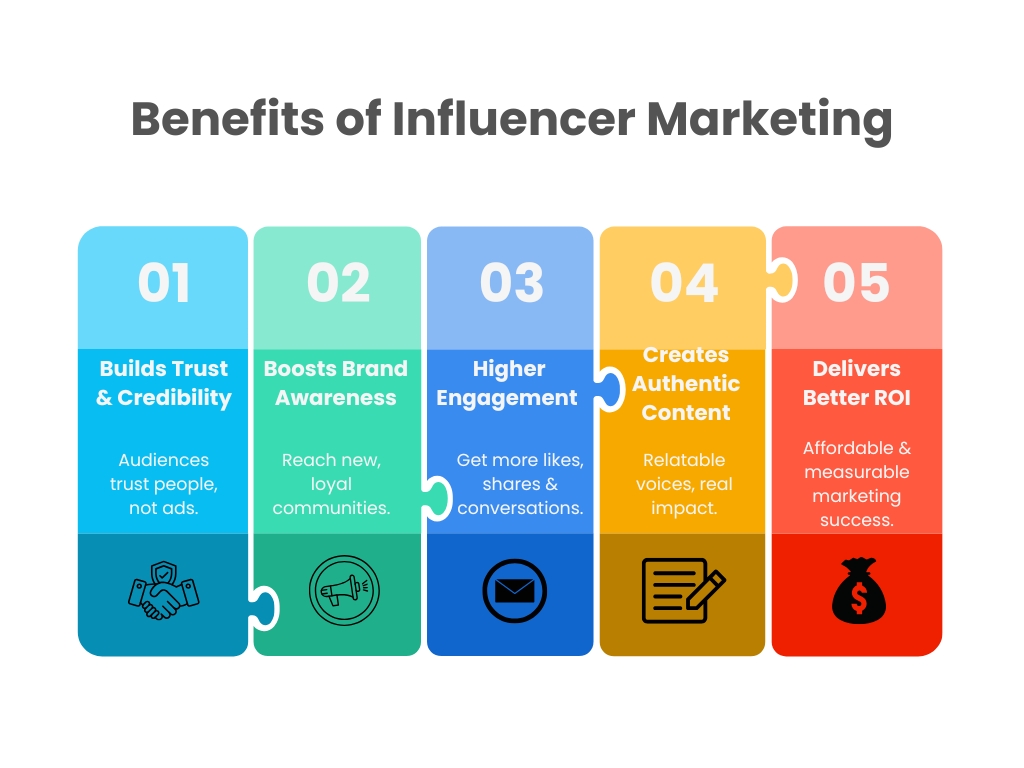
Influencer marketing isn’t just about promoting products — it’s about building genuine connections. When the right voices talk about your brand, they create awareness, trust, and loyalty that traditional ads often can’t achieve. Here are five key benefits that make influencer marketing a powerful growth strategy for modern brands:
Strategy of Influencer Marketing
- Choosing target audience
Defining your target audience is the first step toward a successful influencer campaign. Identify who needs your product by understanding their pain points, interests, and demographics. Once clear, find influencers who resonate with that audience and align with your brand values. Remember, reaching the right people matters more than reaching a large crowd.
- Finding relevant influence which fits your products tone and value
Finding the right influencer is the most important yet challenging part of influencer marketing. The influencer’s tone and personality should align with your brand’s core values and identity. For long-term partnerships, authenticity matters — a single mistake from the influencer can harm your brand image. Tools like Unbox Social can be used to track and evaluate influencers effectively.
- strong campaign creation
Once you’ve identified your audience and selected the right influencer, the next crucial step is campaign creation. Sometimes, influencers may produce content that lacks quality or doesn’t align with your brand’s tone and values, which can negatively impact your brand image.
To avoid this, continuous monitoring and clear communication are essential throughout the campaign. Establish brand guidelines beforehand and conduct regular brand safety checks to ensure the content stays authentic, consistent, and aligned with your marketing goals.
- Measuring Campaign Success
To measure a campaign’s success, compare key metrics before and after it goes live. Track website traffic, CTR, bounce rate, engagement (likes, shares, comments), and sales performance. Once you have baseline data, evaluate post-campaign results against your goals. Use tools like engagement rate calculators, ROI trackers, audience analytics, and data visualization software to measure performance and identify areas for improvement.
Do’s and Don’t of Influencer Marketing
1. Track the Influencer:
Before choosing an influencer, review all their content — look beyond follower count. Check their comment section for engagement quality and ensure they have no history of conflicts or controversies.
2. Maintain Clear Communication:
Be transparent about your goals — whether you want traffic, engagement, or conversions. Communicate your expectations clearly and avoid falling for false promises. Always verify facts before proceeding.
3. Document Everything:
Keep proper documentation of the collaboration. Record key metrics and compare product or campaign performance before and after the partnership.
4. Monitor All Content:
Review all content before it goes live. Ensure it aligns with your brand’s tone, vision, and message. Avoid rushing the process — quality collaborations take time.
5. Build Long-Term Relationships:
Once the campaign is complete, maintain a positive relationship with the influencer. Long-term partnerships build authenticity and strengthen audience trust in your brand.
Choosing the right voice and face makes your influencer marketing truly successful. A long-term relationship builds trust and drives lasting business growth. Keep these points in mind to implement an effective and authentic influencer marketing strategy.