
 By artistkb1993@gmail.com
Have you ever come across an article that is well-written, informative, and visually appealing—but still fails to generate leads or conversions?
In most cases, the problem is not the quality of the content.
The real issue is audience mismatch.
Imagine being extremely thirsty and being offered pizza instead of water. No matter how good the pizza is, it does not solve your immediate need. The same logic applies to content marketing. Even high-quality content fails when it is presented to the wrong audience at the wrong time.
This is where understanding the B2B and B2C audience becomes critical—especially for content writers working with product-based companies in marketing departments.
In this article, you will learn:
- What B2B and B2C audiences mean
- The key differences between them
- Why understanding them is essential for content writers
- How to write strategically for both audiences
What is meant by B2B and B2C Audiences?
Before creating any marketing content, a writer must clearly understand who they are writing for.
B2B Audience (Business-to-Business)

A B2B audience refers to businesses selling products or services to other businesses. The buyers are usually decision-makers, such as business owners, procurement managers, or department heads.
Examples:
Manufacturers, SaaS companies, wholesalers, machinery suppliers, ink manufacturers, and enterprise service providers.
B2C Audience (Business-to-Consumer)
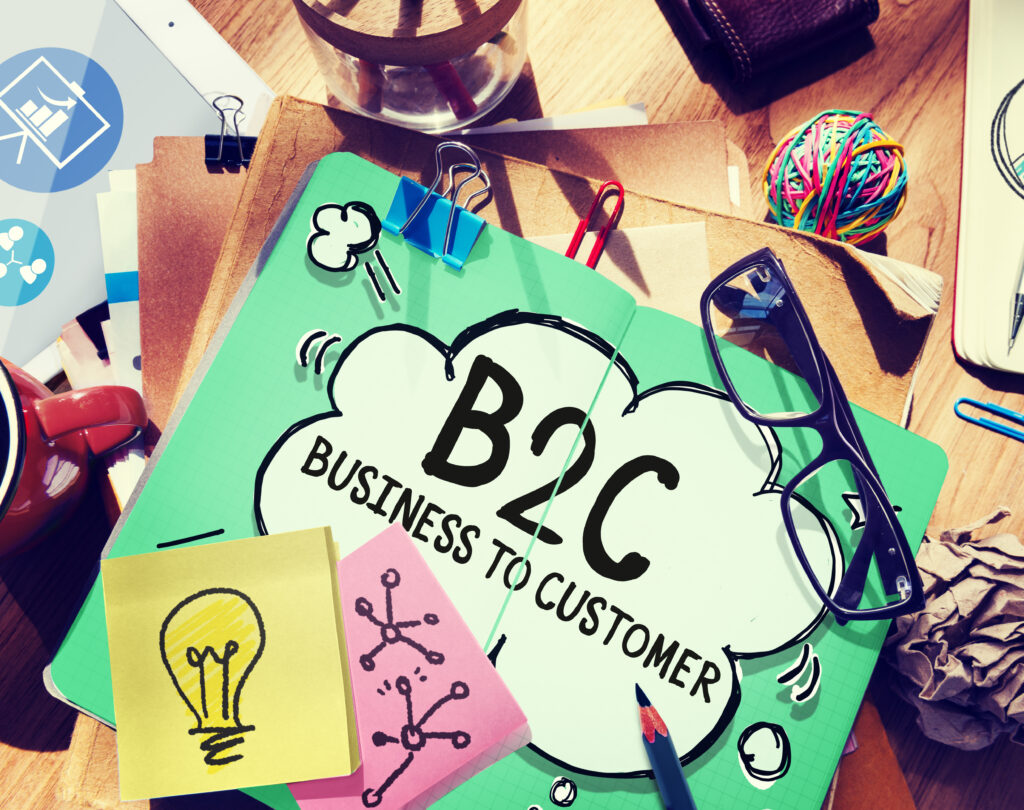
A B2C audience consists of individual customers who purchase products or services for personal use.
Examples:
E-commerce platforms like Amazon, clothing brands, food delivery apps, beauty products, and consumer electronics.
Why Understanding the B2B and B2C Audience Is Important for a Content Writer
When you work in a marketing team—especially in a product-based company—your content is not written just for engagement. It directly supports sales, lead generation, and brand trust.
Understanding the B2B and B2C audience helps a content writer:
1. Create Conversion-Focused Content
Targeting a small group of highly interested users is far more effective than reaching a large, uninterested audience. When you understand buyer intent, you can address real pain points and expectations, which improves conversion rates.
2. Align Content With the Marketing Funnel
B2B and B2C audiences behave differently at each stage of the marketing funnel. A content writer who understands this can create content for awareness, consideration, and decision stages more strategically.
3. Build Trust and Credibility
Audience-specific content feels relevant and personalized. This builds trust, especially in B2B marketing, where buying decisions involve higher risk and longer commitment.
4. Improve SEO and User Intent Matching
Search intent differs between B2B and B2C users. Understanding your target audience allows you to optimize content for the right keywords, tone, and format—leading to better rankings and engagement.
Key Differences Between B2B and B2C Audiences
| Factor | B2B Audience | B2C Audience |
| Meaning | Business-to-Business | Business-to-Consumer |
| Audience Type | Manufacturers, decision-makers, business owners | Individual customers |
| Primary Platforms | LinkedIn, Email marketing, Webinars | Facebook, Instagram, SMS |
| Buying Duration | Long-term relationships and repeat partnerships | One-time or occasional purchases |
Writing Strategically for the B2B Audience
B2B content writing should start with problem identification. Decision-makers respond to content that clearly reflects their challenges and offers practical solutions.
Best practices for B2B content writing:
- Maintain a professional and informative tone
- Focus on ROI, efficiency, quality, sustainability, and reliability
- Use data, case studies, white papers, and industry insights
- Highlight long-term partnerships and after-sales support
Effective platforms for B2B content:
- LinkedIn posts and articles
- Email campaigns and newsletters
- Press releases
- Company updates, product launches, exhibitions, dealer announcements
- Podcasts and webinars with industry experts
Writing Strategically for the B2C Audience
B2C content is driven by emotion, relatability, and instant connection. Customers often make quicker decisions influenced by personal preferences.
Best practices for B2C content writing:
- Use a friendly, conversational, and engaging tone
- Focus on personal benefits, lifestyle improvement, and ease of use
- Keep content short, visual, and attention-grabbing
- Use storytelling, offers, and social proof
Effective platforms for B2C content:
- Instagram, Facebook, YouTube
- Influencer marketing and collaborations
- Reels, short videos, images, and user-generated content
Final Thoughts
Understanding the B2B and B2C audience is not optional for a content writer—it is a foundational skill. When you know who your audience is, how they think, and what motivates them, your content naturally becomes more strategic, relevant, and conversion-focused.
For content writers working with product-based companies, this knowledge directly impacts marketing performance, lead quality, and brand growth.
The better you understand your audience, the better your content performs.
[…] can use a marketing funnel, whether a small B2C business or a large B2B organization. A B2B marketing funnel is longer and generally contains a […]